Product Description
LUMBER SURFACED ON 4 SIDES TO SIZES SHOWN + or - 1/4
Common Name(s): African Padauk, Vermillion
Scientific Name: Pterocarpus soyauxii
Distribution: Central and tropical west Africa
Tree Size:100-130 ft (30-40 m) tall, 2-4 ft (.6-1.2 m) trunk diameter
Average Dried Weight: 47 lbs/ft3 (745 kg/m3)
Specific Gravity (Basic, 12% MC): .61, .75
Janka Hardness: 1,970 lbf (8,760 N)
Modulus of Rupture: 16,830 lbf/in2 (116.0 MPa)
Elastic Modulus: 1,700,000 lbf/in2 (11.72 GPa)
Crushing Strength: 8,130 lbf/in2 (56.0 MPa)
Shrinkage: Radial: 3.3%, Tangential: 5.2%, Volumetric: 7.6%, T/R Ratio: 1.6
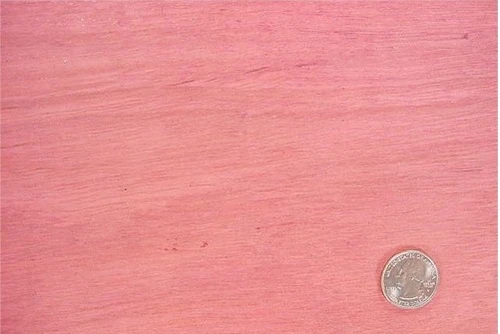
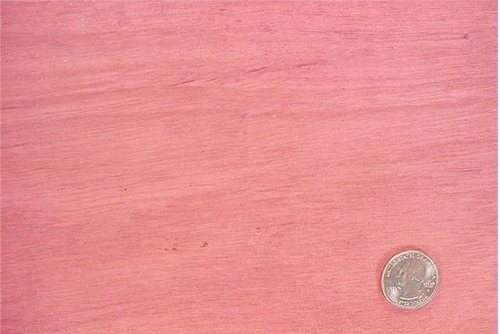
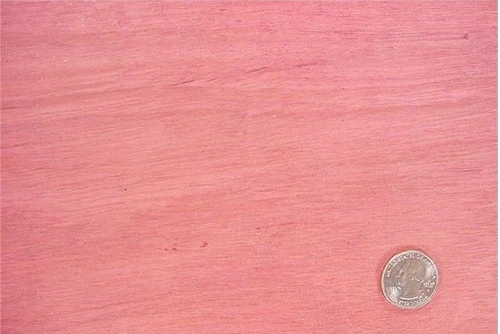
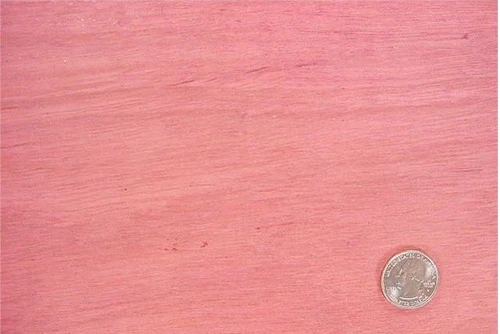
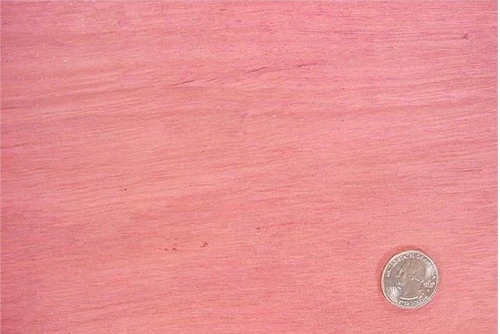
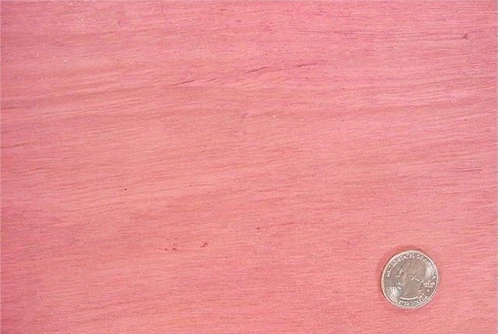
Color/Appearance: Heartwood color can vary, ranging from a pale pinkish orange to a deep brownish red. Most pieces tend to start reddish orange when freshly cut, darkening substantially over time to a reddish/purplish brown (some lighter pieces age to a grayish brown). See the article Preventing Color Changes in Exotic Woods for more information.
Grain/Texture: Grain is usually straight, but can sometimes be interlocked. With a coarse, open texture and good natural luster.
Endgrain: Diffuse-porous; large pores in no specific arrangement; solitary and radial multiples of 2-3; mineral deposits occasionally present; growth rings indistinct; rays not visible without lens; apotracheal parenchyma diffuse-in-aggregates, banded; paratracheal parenchyma aliform (winged), confluent, and banded.
Rot Resistance: Has excellent decay resistance, and is rated as durable to very durable. Padauk is also reported to be resistant to termites and other insects.
Workability: Overall Padauk is easy to work; tearout may also occur during planing on quartersawn or interlocked grain. Padauk turns, glues, and finishes well.
Odor: Padauk has a faint, pleasing scent while being worked. Allergies/Toxicity: Although severe reactions are quite uncommon, Padauk has been reported as a sensitizer. Usually most common reactions simply include eye, skin, and respiratory irritation. See the articles Wood Allergies and Toxicity and Wood Dust Safety for more information.
Pricing/Availability: Widely imported as lumber in a variety of lengths and thicknesses, as well as turning and craft blanks. Should be moderately priced for an import.
Sustainability: This wood species is not listed in the CITES Appendices or on the IUCN Red List of Threatened Species. Common Uses: Veneer, flooring, turned objects, musical instruments, furniture, tool handles, and other small specialty wood objects.
Comments: Padauk has a very unique reddish orange coloration, and the wood is sometimes referred to by the name Vermillion. Unfortunately, this dramatic color is inevitably darkened to a deep reddish brown color. (See the article Preventing Color Changes in Exotic Woods for more information.) UV-inhibiting finishes may prolong, but not prevent the gradual color-shift of this brightly colored wood.
Padauk is moderately heavy, strong, and stiff, with exceptional stability. It’s a popular hardwood among hobbyist woodworkers because of its unique color and low cost.
Padauk is perhaps the most frequently misspelled (and mispronounced) wood species, with Padouk, Paduk, and Paduak being common misspellings. The most common pronunciation is pah-DUKE, it is sometimes mispronounced as Paducah—a city in Kentucky.
LUMBER SURFACED ON 4 SIDES TO SIZES SHOWN + or - 1/4
Common Name(s): Purpleheart, Amaranth
Scientific Name: Peltogyne spp.
Distribution: Central and South America (from Mexico down to southern Brazil)
Tree Size: 100-170 ft (30-50 m) tall, 3-5 ft (1-1.5 m) trunk diameter
Average Dried Weight: 56 lbs/ft3 (905 kg/m3)
Specific Gravity (Basic, 12% MC): .76, .90
Janka Hardness: 2,520 lbf (11,190 N)
Modulus of Rupture: 22,000 lbf/in2 (151.7 MPa)
Elastic Modulus: 2,937,000 lbf/in2 (20.26 GPa)
Crushing Strength: 12,140 lbf/in2 (83.7 MPa
Shrinkage: Radial: 3.8%, Tangential: 6.4%, Volumetric: 10.6%, T/R Ratio: 1.7
Color/Appearance: When freshly cut the heartwood of Purpleheart is a dull grayish/purplish brown. Upon exposure the wood becomes a deeper eggplant purple. With further age and exposure to UV light, the wood becomes a dark brown with a hint of purple. This color-shift can be slowed and minimized by using a UV inhibiting finish on the wood. For more information, see the article Preventing Color Changes in Exotic Woods.
Grain/Texture: The grain is usually straight, but can also be wavy or irregular. Has a medium texture with good natural luster.
Endgrain: Diffuse-porous; medium to large pores, few; solitary and radial multiples; mineral deposits occasionally present; growth rings may be either distinct or indistinct depending on species and growing conditions; rays barely visible without lens; parenchyma winged, lozenge, confluent, unilateral, and occasionally marginal.
Rot Resistance: Purpleheart is rated as being very durable, and resists both decay and most insect attacks, though it has been reported to be susceptible to attack from marine borers.
Workability: Working with Purpleheart can present some unique challenges: if the wood is heated with dull tools, or if cutter speeds are too high, Purpleheart will exude a gummy resin that can clog tools and complicate the machining process. Depending on the grain orientation, can be difficult to plane without tearout. Purpleheart also has a moderate dulling effect on cutters. Odor: Varies depending upon the species: most species have no characteristic odor, though some species can have a pungent scent.
Allergies/Toxicity: Although severe reactions are quite uncommon, Purpleheart has been reported as a sensitizer. Usually most common reactions simply include eye and skin irritation. Purpleheart has also been reported to cause nausea. See the articles Wood Allergies and Toxicity and Wood Dust Safety for more information.
Pricing/Availability: Widely available as lumber in good widths and thicknesses. Prices are in the low to medium range for an imported hardwood.
Sustainability: This wood species is not listed in the CITES Appendices or on the IUCN Red List of Threatened Species.
Common Uses: Inlays/accent pieces, flooring, furniture, boatbuilding, heavy construction, and a variety of specialty wood items.
Comments: Sometimes called Amaranth, this colorful Latin American hardwood is tremendously popular for furniture and other designs that call for a unique splash of color.
In addition to its coloration, Purpleheart has excellent strength properties, and can be used in applications where strength is important—a wood for both form and function.