Product Description
LUMBER SURFACED ON 4 SIDES TO SIZES SHOWN + or - 1/4Common Name(s): Yellowheart, Pau Amarello
Scientific Name: Euxylophora paraensis
Distribution: Brazil
Tree Size: 100-130 ft (30-40 m) tall, 3-5 ft (1-1.5 m) trunk diameter
Average Dried Weight: 52 lbs/ft3 (825 kg/m3)
Specific Gravity (Basic, 12% MC): .67, .83
Janka Hardness: 1,790 lbf (7,950 N)
Modulus of Rupture: 16,810 lbf/in2 (115.9 MPa)
Elastic Modulus: 2,413,000 lbf/in2 (16.64 GPa)
Crushing Strength: 10,080 lbf/in2 (69.5 MPa)
Shrinkage: Radial: 5.6%, Tangential: 6.7%, Volumetric: 12.0%, T/R Ratio: 1.2
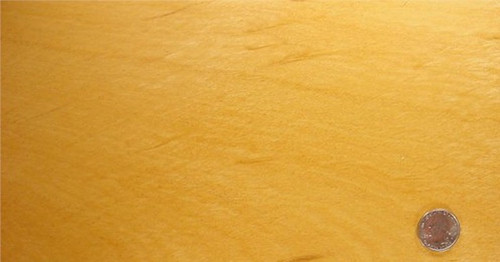
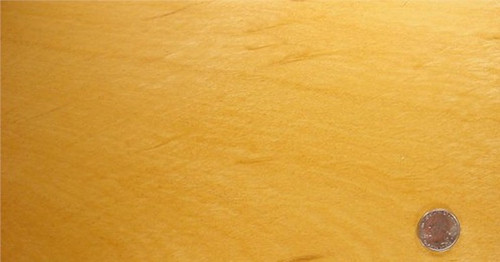
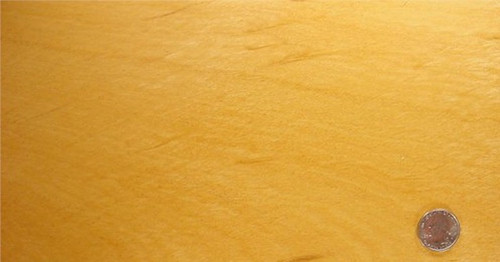
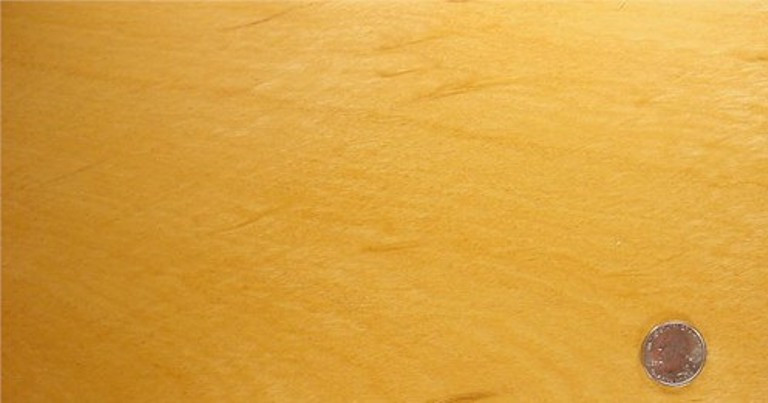
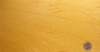
Color/Appearance: Heartwood color ranges from pale to golden yellow, darkening only slightly with age. Sapwood is a pale yellow/white.
Grain/Texture: Grain is usually straight, though some figured pieces may have wavy or interlocked grain. Fine uniform texture and a naturally high luster.
Endgrain: Diffuse-porous; large pores in no specific arrangement, few; solitary and radial multiples of 2-3; heartwood deposits occasionally present; growth rings indistinct; rays visible without lens; parenchyma not indiscernible with lens.
Rot Resistance: Rated as moderately durable in decay resistance, with mixed reports on its resistance to insect attacks.
Workability: Yellowheart is normally easy to work with hand or machine tools, though it can be more difficult if interlocked or figured grain is present. Yellowheart also has a moderate blunting effect on cutters. Glues and finishes well.
Odor: Yellowheart has a mild, unpleasant smell when being worked. Allergies/Toxicity: Yellowheart has been reported to cause skin irritation in some people. See the articles Wood Allergies and Toxicity and Wood Dust Safety for more information.
Pricing/Availability: A commercially important and widely harvested timber in Brazil. Good availability as lumber in a variety of widths. Should be fairly inexpensive for an imported hardwood.
Sustainability: This wood species is not listed in the CITES Appendices or on the IUCN Red List of Threatened Species.
Common Uses: Flooring, furniture, boatbuilding, accents, and turned objects.
Comments: Commonly referred to as Pau Amarello— which is Portuguese for “yellow wood”—few woods are as consistent and vibrant a yellow as Yellowheart. The wood is also sometimes sold as Brazilian Satinwood, though it is not to be considered a true satinwood. Yellowheart has an unusually high amount of radial shrinkage when compared to its tangential shrinkage, giving it a remarkably low T/R ratio.